
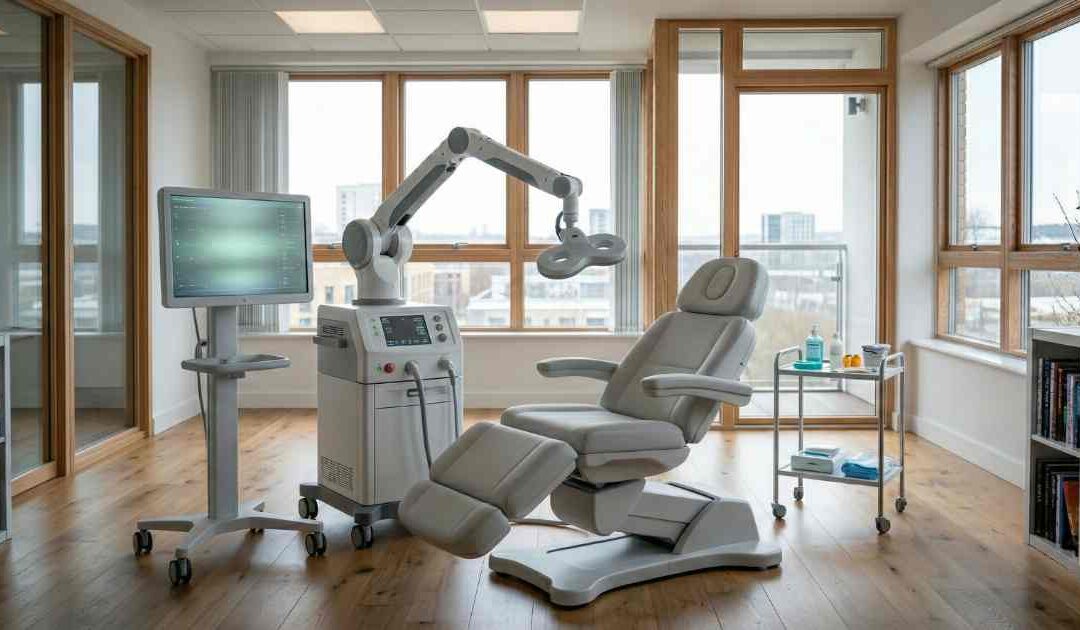
Transcranial Magnetic Stimulation (TMS) is a non-invasive, FDA-approved treatment primarily used for major depressive disorder (especially treatment-resistant depression), as well as conditions like OCD and anxiety in some cases.
Unlike medications or electroconvulsive therapy (ECT), TMS requires no anesthesia, surgery, or sedation—you stay fully awake and alert throughout.
Sessions are outpatient, with no recovery time needed, allowing most people to drive home and resume normal activities immediately.
TMS works by using magnetic pulses to stimulate nerve cells in specific brain regions, such as the dorsolateral prefrontal cortex, which often shows reduced activity in depression.
These pulses help “reset” neural pathways, improving mood regulation over time. A standard course involves 20–36 sessions, typically 5 days a week for 4–6 weeks, though accelerated protocols exist.
Understanding what occurs during a single TMS session can ease anxiety for first-timers. Here’s a detailed breakdown based on standard protocols from leading sources like Mayo Clinic and Cleveland Clinic.
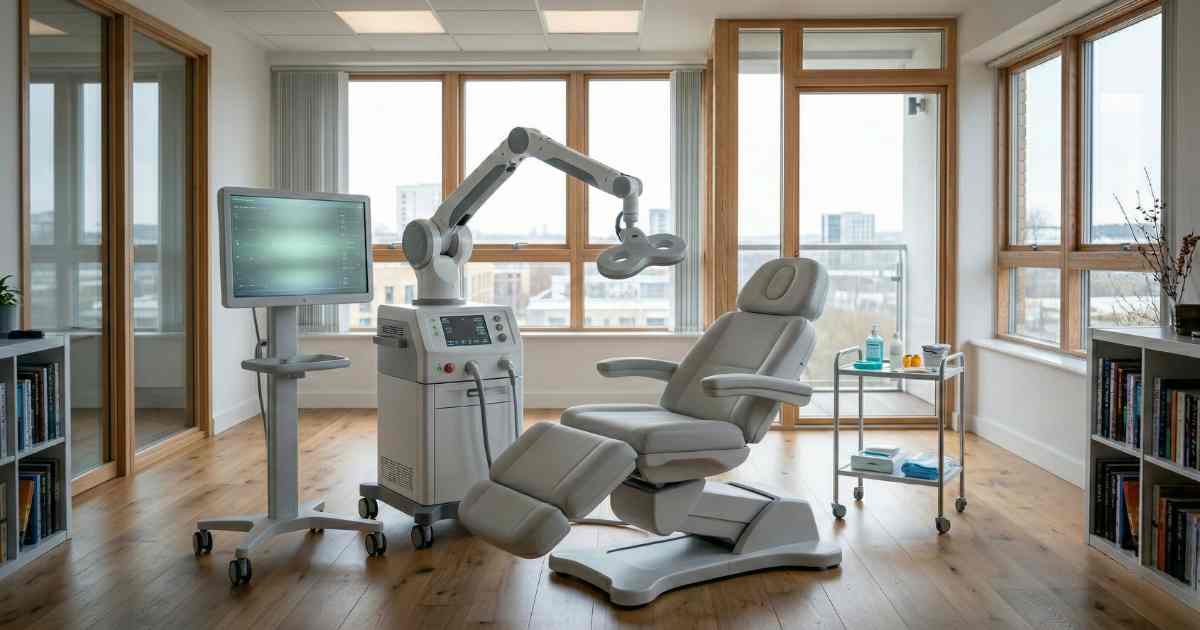
Preparation Before Your TMS Session
Arrive at the clinic (psychiatrist’s office, specialized TMS center, or hospital outpatient unit) relaxed. Sessions usually last 20–40 minutes, depending on the protocol (e.g., standard rTMS, theta-burst, or deep TMS).
- Remove metal objects: Take off jewelry, watches, credit cards, hearing aids, glasses with metal frames, or anything magnetic-sensitive for safety around the strong electromagnet.
- Wear comfortable clothing: Loose-fitting attire works best—no special gown required.
- Ear protection: You’ll receive earplugs or earmuffs because the machine produces loud clicking or tapping sounds (similar to a woodpecker or rapid knocking) with each pulse.
- No fasting needed: Eat and drink normally beforehand, and continue regular medications unless instructed otherwise.
A technician or TMS-trained provider greets you, reviews your chart, and answers questions.
Step-by-Step: What Happens During a Typical TMS Session
Seating and Setup
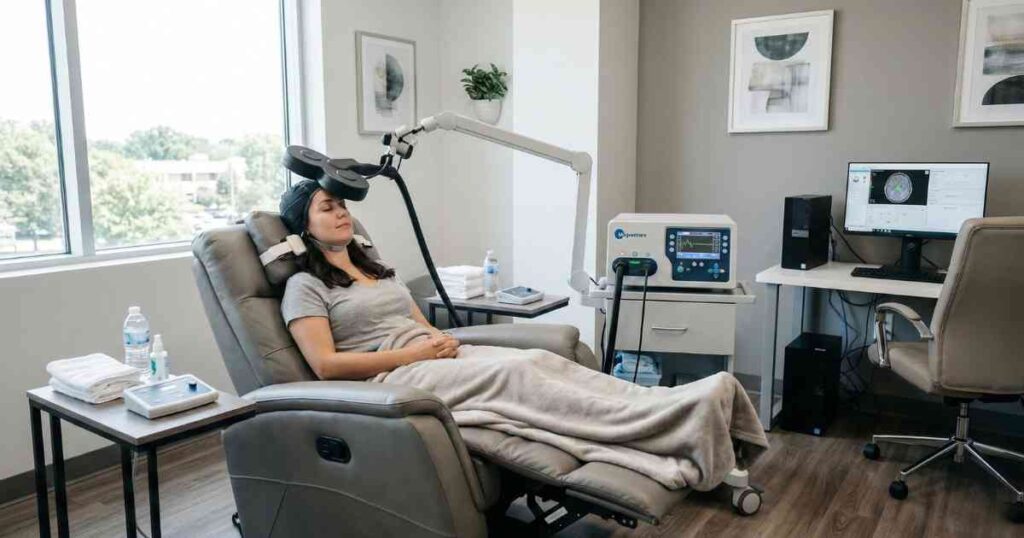
You’ll sit in a comfortable, reclining treatment chair (like a dentist’s chair but more relaxed). The chair helps keep your head stable. Some clinics use a helmet-like device for precise positioning.
Coil Placement
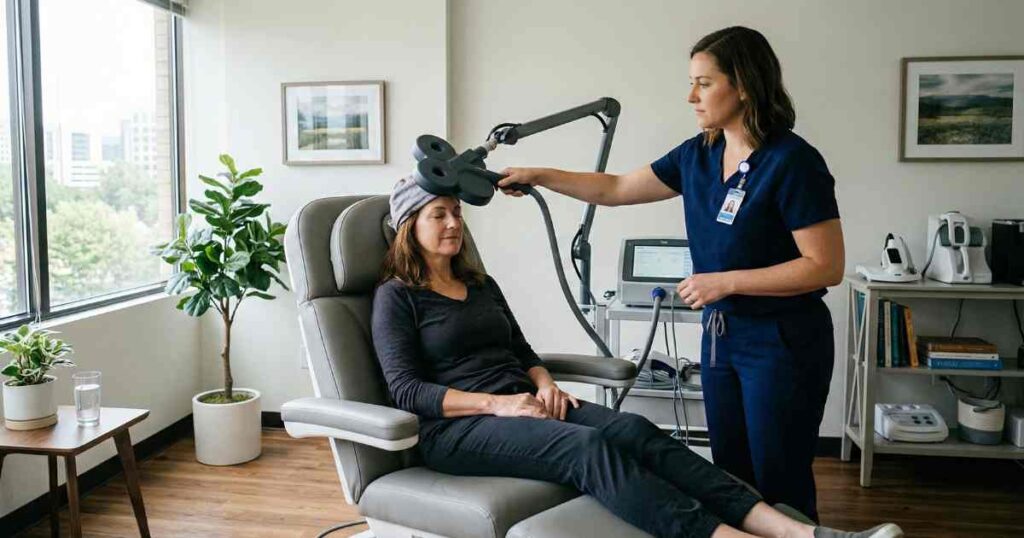
The provider positions an electromagnetic coil (a small, insulated paddle or figure-8 shaped device) against your scalp, usually over the left dorsolateral prefrontal cortex for depression treatment.
- For your first session (or “mapping” session), they may re-determine your motor threshold—the minimal pulse strength needed to cause a slight thumb or hand twitch when stimulating the motor cortex. This personalizes intensity and ensures safety/effectiveness. Mapping typically takes extra time on day one (up to an hour total).
Starting the Treatment
Once positioned, the TMS machine is activated.
It delivers repetitive magnetic pulses in short bursts (e.g., 10 pulses per second in standard rTMS, or rapid bursts in theta-burst stimulation).
- You feel a gentle tapping or knocking sensation on your scalp where the coil rests—this is the magnetic pulses contracting scalp muscles or creating a mild percussive feeling.
- Many describe it as light finger-tapping or a woodpecker pecking; it’s generally not painful, though some experience mild discomfort (especially early sessions).
- The loud clicking sound occurs with every pulse—earplugs help significantly.
- You remain awake: Many patients relax, close their eyes, listen to music (some clinics provide headphones), watch TV, or chat with the technician.
During the Session
Pulses are delivered in cycles: for example, 4 seconds of pulses followed by 26 seconds of rest, repeated for the full duration.
- No electricity enters your body directly—only magnetic fields pass through the skull painlessly to induce small electrical currents in targeted brain neurons.
- The technician monitors you closely, adjusting if needed for comfort.
Ending the Session
The machine stops, the coil is removed, and you’re free to go. No grogginess or downtime occurs.
- Mild side effects (if any) like temporary headache, scalp tenderness, or lightheadedness often fade quickly—over-the-counter pain relief helps if needed.
What to Expect Overall
- First few sessions: Discomfort may be more noticeable as you adjust, but it typically lessens.
- Full course: Benefits often build gradually—many notice mood improvements after 2–4 weeks.
- Safety: TMS has a strong safety profile; serious side effects (like seizures) are very rare (<0.1%). It’s well-tolerated compared to medications.
TMS offers hope for those who’ve tried multiple antidepressants without success. If you’re considering it, consult a qualified provider to see if you’re a candidate.
FAQ: Common Questions About TMS Sessions of What Happens During a TMS Session: A Step-by-Step Guide
Is TMS painful?
Most people feel only mild tapping or discomfort on the scalp. It’s generally well-tolerated and far less intense than many expect—no needles, shocks, or sedation involved.
How long does each session last?
Typically 20–40 minutes, depending on the protocol. The first (mapping) session may take longer (up to 60 minutes).
Do I need to take time off work?
No—sessions are quick, with zero recovery time. Many people go straight to work or errands afterward.
What does it feel like during the pulses?
A rhythmic tapping on your scalp, plus loud clicking sounds (earplugs provided). Some feel mild muscle twitches in the face or hand initially.
Can I drive myself home?
Yes, absolutely. No impairment occurs—you stay fully alert.
Are there any restrictions during treatment?
Avoid heavy caffeine right before if it increases anxiety. Remove metal items. Follow your provider’s prep instructions.
How soon do people feel better?
Some notice changes in 1–2 weeks, but full benefits often emerge after 4–6 weeks of consistent sessions.
What if the tapping sensation bothers me?
Tell your technician—they can adjust intensity, pause, or use numbing cream for sensitive scalps. Most adapt quickly.