
Are you struggling to find relief from depression or anxiety despite trying different treatments? You might have heard about TMS therapy but wonder if it’s the right choice for you.
Understanding who is a good candidate for TMS therapy can help you make an informed decision about your mental health.
This article will guide you through the key signs that show whether TMS therapy could be the breakthrough you’ve been searching for.
Keep reading to discover if this innovative treatment fits your needs and how it might change your life.

Signs Of Treatment-resistant Depression
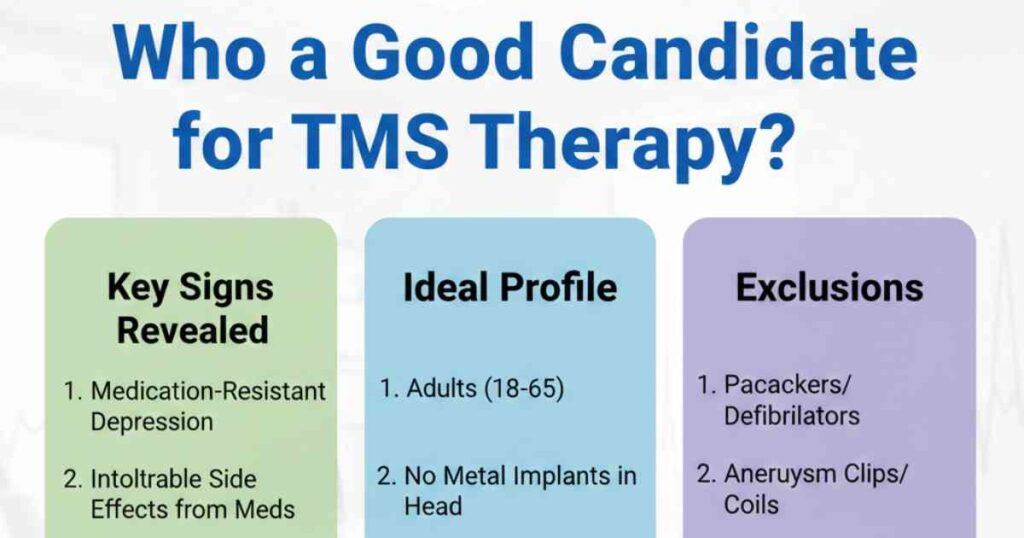
Recognizing treatment-resistant depression is key to finding the right help. This type of depression does not improve with usual treatments. Knowing the signs helps decide if TMS therapy is suitable. It shows when other methods have not worked well.
People with treatment-resistant depression often feel stuck in their symptoms. Their mood stays low despite trying different medicines or therapies. Identifying these signs early can lead to better care choices.
Persistent Symptoms Despite Medication
One main sign is ongoing depression symptoms. These remain strong even after using antidepressants. Feelings of sadness, hopelessness, and tiredness do not ease. This shows the medication alone is not enough.
Limited Improvement With Therapy
Therapy may help some, but not all. When talking to a counselor does not lift the mood, it signals resistance. Trying multiple therapy types without success points to this condition.
Frequent Relapses After Initial Success
Some patients improve briefly, then relapse. This cycle repeats despite treatment efforts. It suggests the depression is harder to treat than usual. Constant relapses lower quality of life significantly.
Severe Side Effects From Medications
Strong side effects can limit medication use. Some stop treatment early due to discomfort. This leaves depression untreated and symptoms persist. TMS therapy offers an option without these drug side effects.
Conditions That Benefit From Tms
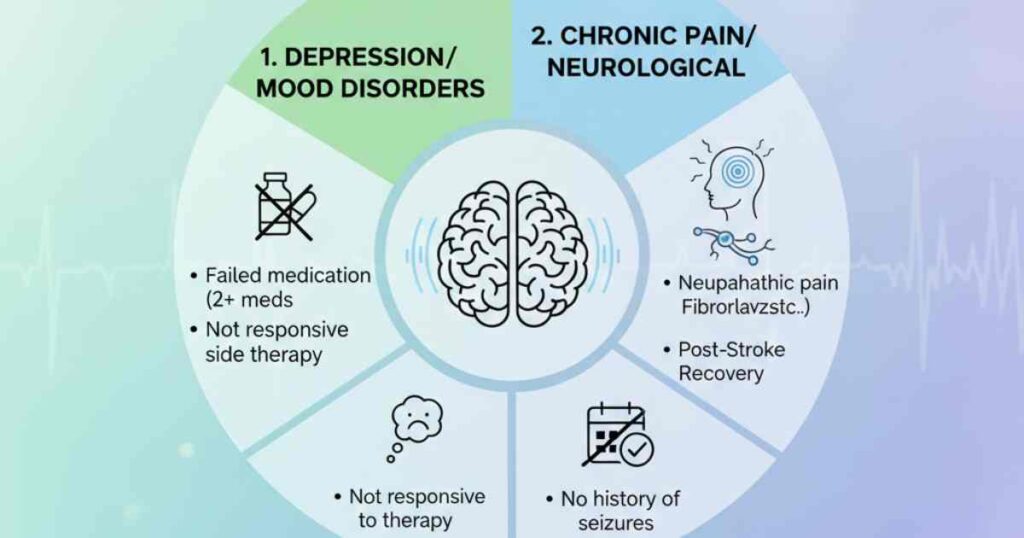
Transcranial Magnetic Stimulation (TMS) therapy helps treat several mental health conditions. It uses magnetic pulses to stimulate brain areas linked to mood and thought. Many people find relief from symptoms after TMS therapy sessions.
Understanding which conditions benefit from TMS helps identify good candidates. This therapy suits those who have not responded well to other treatments.
It offers a non-invasive option with fewer side effects than some medications.
Major Depressive Disorder
TMS is widely used for major depressive disorder. It helps patients who do not improve with antidepressants. The therapy targets brain regions that regulate mood. Many experience reduced depression symptoms after TMS treatment.
Obsessive-compulsive Disorder (ocd)
TMS also benefits people with OCD. It can reduce compulsive behaviors and obsessive thoughts. The therapy focuses on brain circuits involved in OCD. Patients often see improvements after a course of TMS sessions.
Anxiety Disorders
Some anxiety disorders respond well to TMS therapy. It helps calm overactive brain areas linked to anxiety. Patients report feeling less anxious and more relaxed. TMS offers an alternative when medications do not work.
Post-traumatic Stress Disorder (ptsd)
TMS may aid those suffering from PTSD. It can reduce symptoms like flashbacks and nightmares. The therapy supports brain function and emotional regulation. Patients may experience better sleep and mood after treatment.
Chronic Pain Conditions
Certain chronic pain conditions improve with TMS therapy. It affects brain areas that process pain signals. Patients often feel less pain and better quality of life. TMS offers hope for those with persistent pain.
Physical And Mental Health Factors
TMS therapy can help many people, but it suits some better than others. Physical and mental health play big roles in deciding who benefits most.
Understanding these factors helps find the right candidates for this treatment.
Health conditions impact how well TMS therapy works. Doctors check both body and mind health before recommending it. This ensures safety and increases the chance of success.
Physical Health Considerations
Good physical health supports TMS therapy. Certain medical conditions may affect treatment safety. People with metal implants near the head usually cannot have TMS.
Seizure disorders need careful review before starting TMS. Patients should inform doctors about any chronic illnesses. A stable physical state helps reduce risks during therapy.
Mental Health Conditions
TMS often targets depression and anxiety disorders. Patients with treatment-resistant depression are good candidates. It can also help those who cannot take certain medications.
Severe mental illnesses like bipolar disorder need extra caution. TMS might not suit those with psychosis. A mental health professional evaluates each case carefully.
Medication And Treatment History
Past treatments affect TMS suitability. Those who tried antidepressants without success may benefit. It offers a non-drug option for many patients.
Doctors review all medications to avoid interactions. Certain drugs may increase seizure risk during TMS. Open communication about medicines is important for safety.
Age And Lifestyle Considerations
Age and lifestyle play a key role in deciding if someone is a good candidate for TMS therapy. Understanding these factors helps ensure the treatment fits well with personal needs and daily routines.
Different ages may respond differently to TMS therapy. Lifestyle habits also affect how effective the treatment can be.
Age Range Suitable For Tms Therapy
TMS therapy suits adults over 18 years old. Most studies focus on people between 18 and 65 years. Some older adults may benefit but need extra medical checks. Young children and teenagers usually are not candidates for TMS.
Lifestyle Factors Impacting Tms Success
People with stable routines often find it easier to attend TMS sessions. Regular work schedules and family support help keep treatment consistent. Unstable lifestyles may affect how well the therapy works.
Health And Activity Level Considerations
Good overall health supports better results from TMS therapy. Active individuals who manage stress well may see quicker improvements. Sedentary lifestyles or poor health can slow progress but do not always block benefits.
Medication And Substance Use
Medication use can affect TMS therapy outcomes. Some drugs may increase side effects or reduce effectiveness. Alcohol and drug use might interfere with treatment and healing. Full disclosure to the doctor is important.
Consulting A Specialist For Tms
Consulting a specialist for Transcranial Magnetic Stimulation (TMS) therapy is an important step. A trained healthcare provider can evaluate your condition carefully.
This helps to decide if TMS is a good option for you. The specialist will review your medical history and symptoms in detail.
They will discuss your past treatments and their effects. This helps to understand if TMS might work better. The specialist also explains what to expect during the therapy.
They answer all your questions and concerns clearly. This makes you feel more comfortable and informed.
Initial Evaluation And Medical History Review
The first visit often starts with a thorough evaluation. The specialist checks your mental health and overall health. They ask about previous treatments and medications.
This helps to identify any risks or reasons to avoid TMS. A clear medical history is crucial for safe treatment.
Understanding Symptoms And Treatment Goals
The specialist talks about your symptoms in detail. They want to know how these affect your daily life. This helps to set clear goals for TMS therapy.
The specialist explains how TMS may help improve your condition. They ensure you understand what results are possible and realistic.
Discussing Treatment Plan And Expectations
The specialist outlines the TMS treatment plan. This includes how many sessions you may need. They explain the process and what happens during each session.
You learn about possible side effects and safety measures. Clear expectations reduce anxiety and help you prepare.
Frequently Asked Questions of Who Is a Good Candidate for TMS Therapy: Key Signs Revealed
Who Can Benefit Most From Tms Therapy?
TMS therapy suits people with depression not helped by medicines. It may also help those who prefer non-drug treatments. A doctor can decide if TMS fits your needs.
What Conditions Does Tms Therapy Treat Effectively?
TMS is mainly for depression that does not improve with drugs. It can also help with anxiety and PTSD in some cases. Each person’s situation is different, so evaluation is key.
How Do Doctors Determine A Good Tms Therapy Candidate?
Doctors look at your medical history and past treatments. They check if depression symptoms are severe and lasting. A careful exam helps find out if TMS is right for you.
Conclusion
TMS therapy suits those with depression not helped by medicines. People who want a non-drug option may try it. It works best for adults without certain medical issues.
A doctor can decide if TMS fits your needs. Many find relief after several sessions.
It offers hope when other treatments fail. Talk to a healthcare provider to learn more. Choosing the right therapy is key to feeling better.